
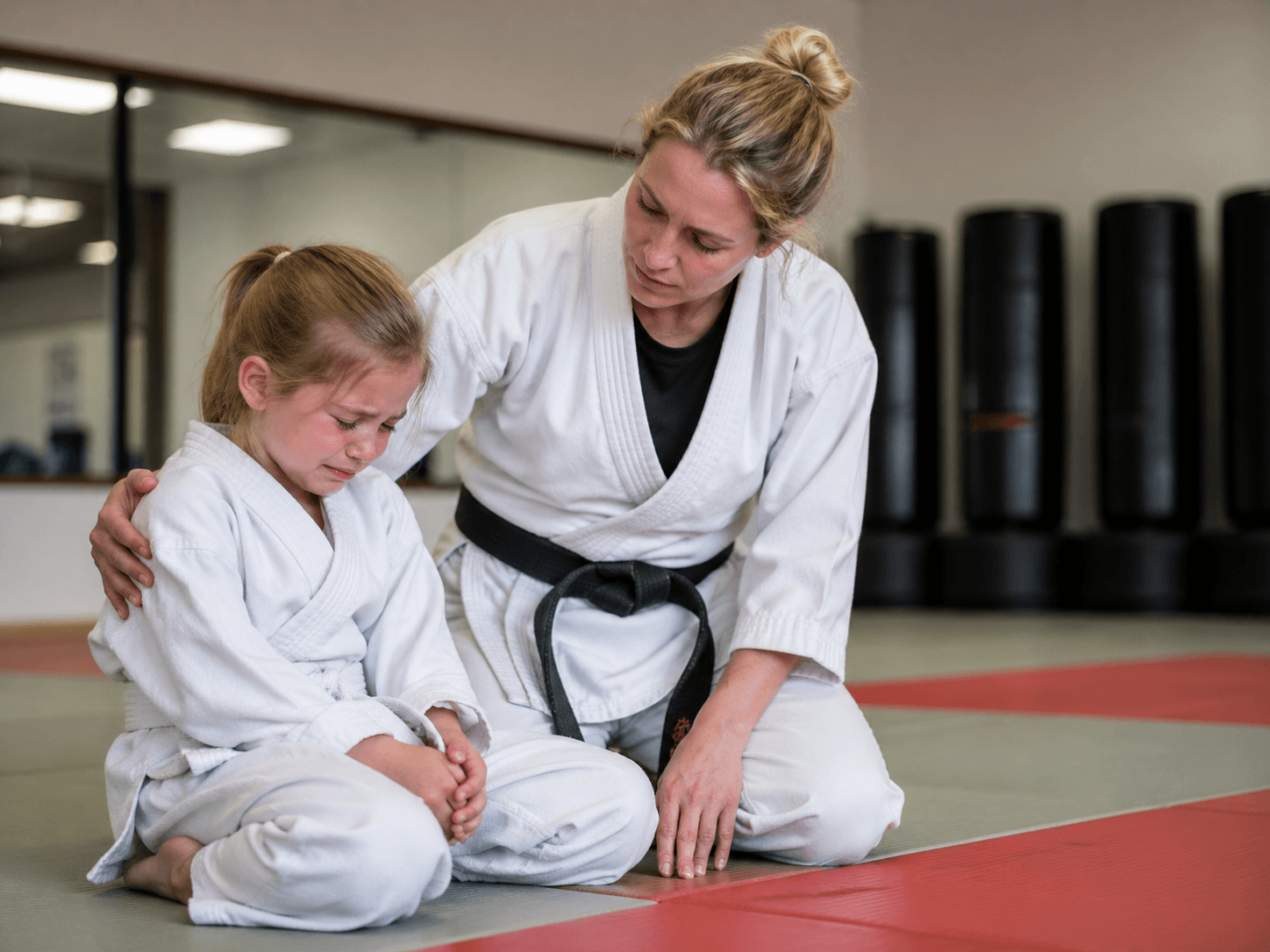
It happens to nearly every parent at some point. Your child walks out of a particularly demanding karate class – tired, frustrated, maybe even in tears – and suddenly, they don’t want to go back.
As a parent, it can feel easier to give in, to avoid the drama, the crying, and the emotional standoff. But from a Sensei’s perspective, this is exactly the moment that matters most.
Hard Training Is Not a Mistake – It’s the Point
Difficult sessions are not accidents. They are a fundamental part of the journey. Growth in martial arts – and in life – comes from facing challenges, not avoiding them.
Acknowledge the Struggle – But Don’t Soften the Standard
First, acknowledge what your child is feeling. That class was difficult. It’s okay to say, “I saw that was tough for you,” or “I understand why you feel upset.”
This isn’t about dismissing their emotions; it’s about showing them that struggle is normal. When something pushes them beyond their comfort zone, it can feel overwhelming. That is a natural human response. However, while their feelings are valid, those feelings should not be the deciding factor in their training.
Empathy Is Not Permission to Quit
This is the part where many parents hesitate: empathy does not mean surrender.
If a child is allowed to quit simply because an experience was hard, they are being taught a dangerous lesson – that discomfort is a signal to stop, rather than a signal to grow. Karate is not just about physical techniques; it’s about resilience, discipline, and learning to keep going when things aren’t easy.
Tears Are Allowed – Quitting Is Not
Yes, there may be tears. There may be dramatic protests. You might hear, “I hate it!” or “I’m never going back!” This is emotional release, not a well-considered decision.
- Let them cry: Let them express that frustration. Those feelings are real, and letting them out helps them process the experience.
- Stay grounded: Do not let the tears dictate the outcome. Crying is an emotional response, not a negotiation tactic.
- Remain firm: Comfort them, stay calm, but remain resolute. “I hear you. I know it was hard. And we are still going to the next class.”
This kind of steady response teaches them that feelings are valid, but they do not have to determine our actions.
What Lesson Is Really Being Taught?
Think about the long-term lesson being written in these moments. Life does not become easier later – it becomes more demanding.
Real Life Won’t Let Them Quit
- A tough exam at school: They cannot quit because it didn’t go well.
- A difficult job interview: They cannot walk away from ever trying again.
- A challenging colleague: They cannot simply give up their career.
These situations are guaranteed parts of life. We don’t magically wake up as resilient adults. There are no miracles – there is only training, and that training starts in childhood.
This Is Where Resilience Is Forged
That hard karate class is where a child learns to stay composed under pressure. That moment when they want to quit but don’t? That is where resilience is built. Returning to the dojo after a bad session is where true confidence is forged.
If children learn early that walking away is an option whenever things feel difficult, that pattern will follow them. But if they learn to stand, to return, and to try again despite discomfort, that becomes part of who they are.
One Bad Class Does Not Define the Journey
It is important to remind them that not every session will be a struggle. Some classes are lighter, some are more technical, and some are even enjoyable in a different way. One difficult class does not define their path – but how they handle it often defines their growth.
Your Role Isn’t to Make It Easy
The role of a parent is not to remove every obstacle. It is to guide the child through them, even when it is uncomfortable for everyone involved.
Stand firm. Be compassionate, but be resolute. Let them feel their emotions, but do not let those emotions make the decisions for their future.
The Lesson That Will Outlast Childhood
One day, when life presents them with something far harder than a karate class, they won’t panic and they won’t quit. They will recognize the feeling of being challenged, they will stand their ground, and they will push forward.
And that lesson begins here.