
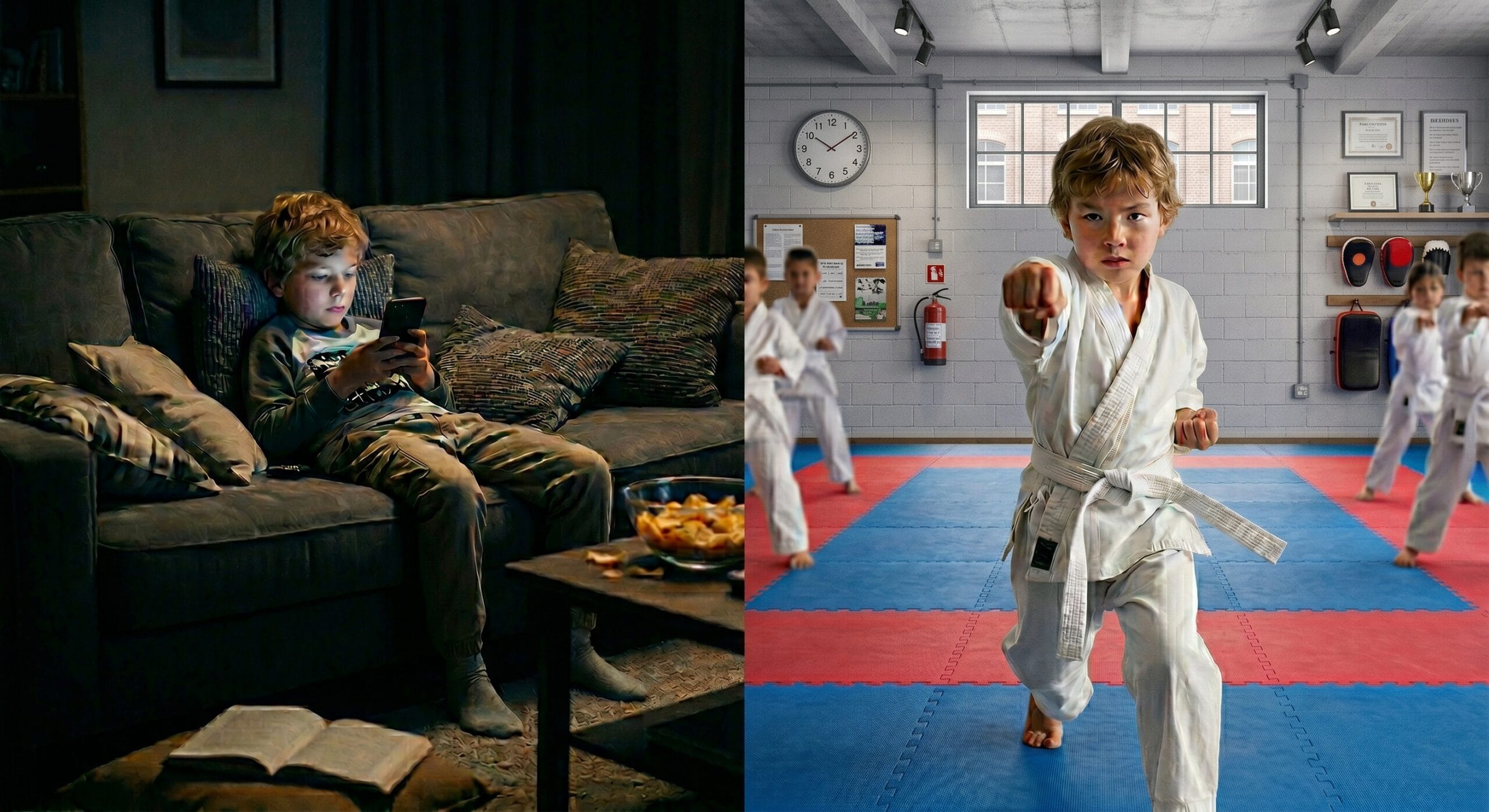
As parents, you all want the best for your children. You think about their education, their health, their happiness… and then, without even noticing, it is easy to accidentally train them to become extremely skilled at one thing: doing absolutely nothing after 4 pm.
It sounds harmless. School finishes, they come home, maybe have a snack, scroll a bit, relax, and recharge. Evenings are calm, and weekends are treated as “well-deserved rest.” Perfect childhood, right?
Well… fast forward 3-5 years. School suddenly becomes serious. Exams appear out of nowhere (as they always do), expectations grow, and now your child is expected to study after school, stay focused, and maybe even juggle a few responsibilities.
And what happens? They’re exhausted from… one thing. One homework task feels like climbing Everest. One after-school activity wipes them out for the entire evening. As a parent, you might start wondering: “Why do they have so little energy?”
Busy Is a Skill (And No, It Doesn’t Download Automatically at 16)
The answer is actually quite simple – and slightly uncomfortable. They were never taught how to be busy. Being “busy” is a skill. It doesn’t magically appear at age 16 along with exam stress and caffeine. It’s built over time through routine, consistency, and yes – doing things even when they’d rather lie on the sofa and debate whether opening the fridge again counts as exercise or if a new TikTok dance is recognized as activity by the smartwatch.
Children who grow up with structure – who train, who show up regularly, who commit to something – develop habits that go far beyond the activity itself. They learn that evenings are not just for collapsing dramatically after school as if they’ve just completed a marathon (they haven’t). They learn that they can, in fact, do more than one thing in a day and survive. But that has to be taught by a parent from a young age.
More Karate Training, More Energy (Yes, Really)
Take our karate training as an example. A child who trains a few evenings a week gets used to it. At first, sure, they’re tired. There might be complaints. Possibly Oscar-worthy performances about how “this is the most exhausting day of my life.”
But then something interesting happens – they adapt. Their bodies get stronger. Their minds get sharper. Their routine becomes normal. And suddenly, training after school isn’t a shocking inconvenience – it’s just part of life.
And here’s the twist: they don’t become more tired. They become more capable. It might sound strange, but energy doesn’t only come from rest. If that were true, teenagers would be the most energetic humans on the planet. Energy also comes from use. Children who are active, who push themselves, and who are used to movement and effort, tend to have more stamina – not just physically, but mentally. They know how to keep going, even when they’re a bit tired. (A very useful life skill, by the way. Adulthood is basically just being a bit tired all the time and carrying on anyway.)
So when life inevitably asks more of them – studying, responsibilities, work – they’re ready. Not because it’s easy, but because it’s familiar.
Weekends: Recovery Time or Wasted Potential?
And then there are weekends. Ah, yes, the sacred time for… doing nothing in slightly different positions. Weekends often turn into a mix of sleeping in, screens, wandering around shopping centers and streets, or “just hanging out” – which usually means standing somewhere and collectively deciding there’s nothing to do.
But weekends can be something else entirely. They can be filled with karate competitions, belt gradings, visiting other dojos, traveling, learning, and progressing. They can teach children that time has value. That growth doesn’t pause just because it’s Saturday.
And no, this doesn’t mean children can never relax. It just means relaxation isn’t their only skill.
Show Me Their Friends, I’ll Show You Their Future
A common concern parents have is: “But their friends are doing something else…” Of course they are. There are always friends doing something else. Usually, nothing urgent, nothing structured, and nothing that requires showing up on time.
But here’s the important part: friends are where you are. Children build friendships based on shared environments. So the real choice isn’t whether your child will have friends – it’s which kind of friends they’ll have.
- The ones passing the time in the streets or shopping centers, looking for trouble (and very likely that trouble will find them, whether they want it or not) or staring at nothing?
- Or the ones training together, supporting each other, learning discipline, traveling to competitions, celebrating progress, and occasionally hitting each other (in a very controlled and respectful way, of course)?
One group learns how to pass the time. The other learns how to use it.
This Was Never Just About Karate
And this is the bigger picture. This isn’t really about karate. Not just karate, anyway. It’s about teaching children how to live in a world that will demand more from them every year. It’s about giving them the tools to handle pressure, to stay consistent, and to keep going when things aren’t easy (because they won’t be).
It’s about building habits early – habits that quietly shape who they become. Because in the end, the question isn’t whether your child is busy today. It’s whether they’ll be capable tomorrow.
So… What Are You Actually Teaching?
Are you teaching your children that evenings are for switching off completely? Are those weekends for filling time until Monday comes back around? Or that life is something to engage with – to show up for, to work at, to grow through?
Whether you plan it or not, you are teaching them something every single day.
And those lessons… tend to stick.