
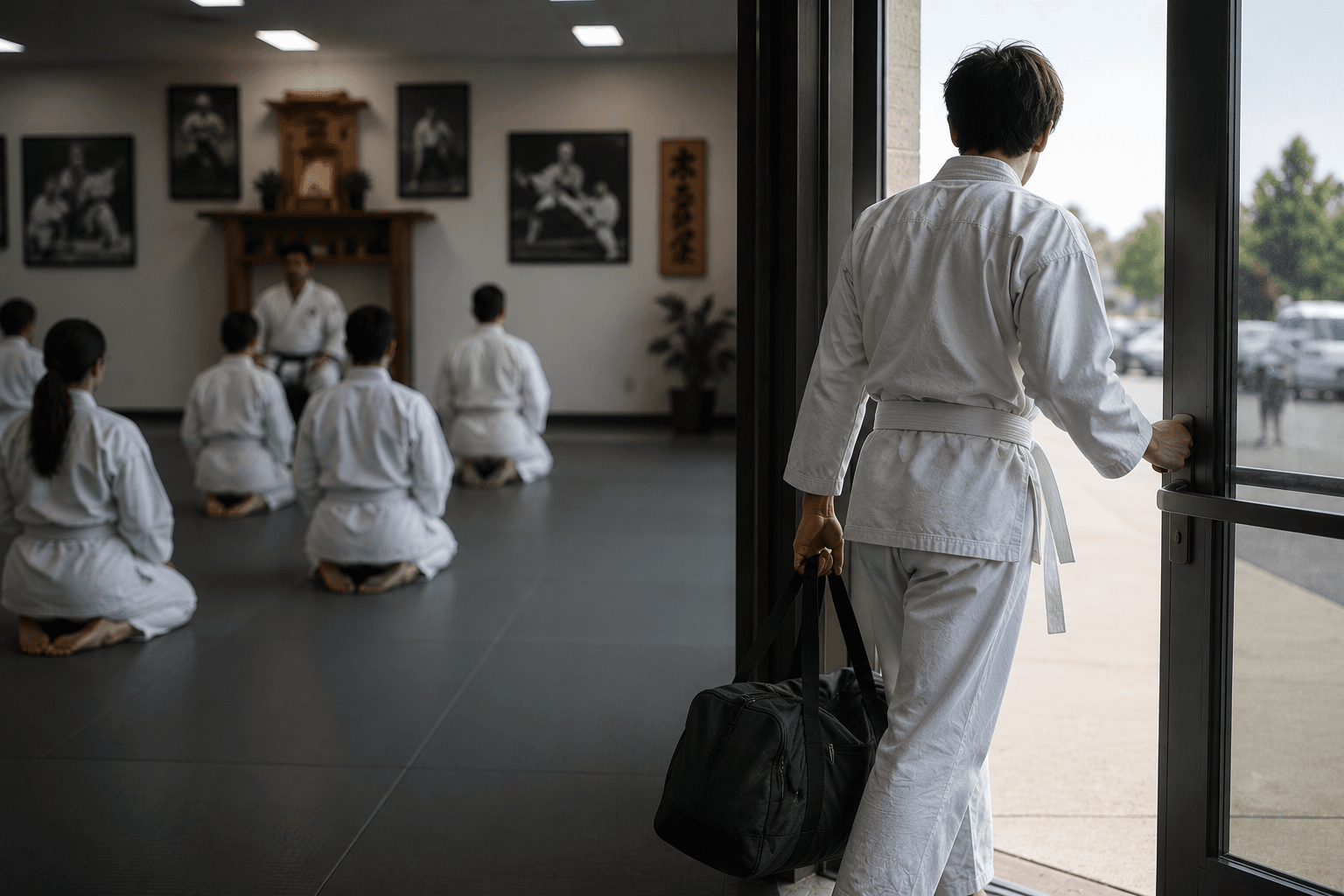
Every year a fresh wave of wide-eyed enthusiasts storms into our dojo, vibrating with the kind of misguided optimism usually reserved for people who think they’ll learn a language in three weeks via an app. They turn up with visions of cinematic glory: spinning kicks, dramatic sweat-streaks, the sheer coolness of a black belt.
Then reality shows up. And by reality I mean the first time they discover that a gedan-barai is significantly less cinematic than it looked on TikTok.
So if you’ve ever wondered why people quit karate — or you’re a beginner quietly clocking the exits yourself — here’s why the dojo floor becomes a revolving door of abandoned dreams.
1. Karate Isn’t an Action Movie
Thanks to Hollywood, every new student expects to be a lethal weapon by week two. What they get is repetition. Endless, soul-crushing repetition.
Throw the same basic punch five thousand times until your shoulder files a complaint, and the “warrior spirit” tends to evaporate somewhere around rep number two hundred. Usually faster if it’s a humid evening and the air in the dojo has gone thick.
2. The Instant Gratification Problem
We live in an age where you can order a pizza, a film and a soulmate with three taps. So naturally people assume their karate will turn up the same way, ideally by tomorrow afternoon.
A calm head and a clean kick take years. Not minutes, not a weekend. Years. And the moment that sinks in, a fair few students decide their evenings are better spent scrolling.
3. Why Is He Better Than Me?
There’s always one. The person who seems to pick up a kata in half the time everyone else needs. Most students look at that person, quietly lose their minds, and conclude that if they aren’t the best in the room by now it must be the universe’s fault.
It isn’t. The only person you’re actually racing is the version of you that nearly quit last Tuesday.
4. The Ego Meets the Floor
Nothing humbles you like going down in front of the whole class, or blanking completely on the next move in a kata your body supposedly knows.
Plenty of students read that as proof they’re fundamentally broken, rather than what it is, which is an ordinary Tuesday for anyone who trains. If your ego can’t survive a few clumsy mistakes, the dojo will find out long before you reach green belt.
5. The “I’m Too Busy” Thing
“I’ve got too much on,” they say, four hours deep into doom-scrolling. Between the games, the group chats and the general project of having a life, the discipline karate asks for starts to feel like an errand.
Treat your training as optional and the quitting more or less books itself.
Why the Stubborn Ones Stay
Then there are the survivors. The ones who work out that karate was never about being the best fighter in the room. It’s about being the most irritating person in it to discourage.
They figure out the secret to a black belt isn’t talent or some mystical bloodline. It’s turning up. Tired, bored, slightly resentful, would-rather-be-anywhere-else, and turning up anyway.
Persistence isn’t a superpower. It’s a refusal to be anything other than a person who finishes what they started.
What a Black Belt Actually Is
A black belt is a white belt who was too stubborn to quit. The dojo’s open, the floor’s hard, and the training is repetitive on purpose.
See you at the next class. If you’re still here, anyway.
So which is it for you right now? Still loving every minute, or starting to feel the itch to bail? Tell us in the comments. We love a good excuse.